Latest Content Marketing Trends
Uncategorized

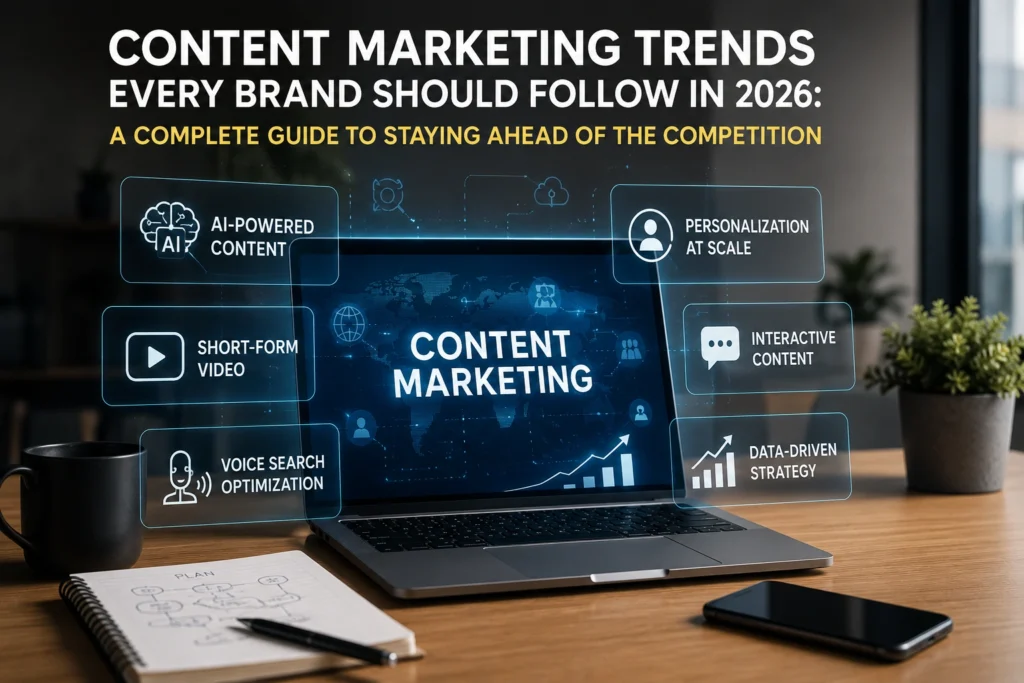
Content Marketing Trends Every Brand Should Follow in 2026: A Complete Guide to Staying Ahead of the Competition

Introduction: Why Content Marketing Is Evolving Faster Than Ever Latest Content Marketing Trends continue to transform the digital marketing landscape as consumer behavior, search engine algorithms, and digital technologies evolve. In 2026, brands can no longer rely on outdated strategies or publish content without a clear purpose. Instead, businesses must create meaningful, engaging, and data-driven content that addresses customer needs while adapting to emerging technologies. By following the Latest Content Marketing Trends, organizations can strengthen their online presence, improve customer engagement, and build lasting relationships that drive long-term business growth. The rapid growth of artificial intelligence, voice search, personalized experiences, and interactive media has fundamentally changed how audiences consume information. Therefore, marketers must continuously refine their content strategies to remain competitive. This guide explores the most important Content Marketing Trends Every Brand Should Follow in 2026, helping businesses improve visibility, increase engagement, and achieve sustainable digital growth. 1. AI-Powered Content Creation Becomes a Strategic Asset Latest Content Marketing Trends highlight how artificial intelligence has evolved from a productivity tool into a strategic partner for content marketers. In 2026, AI assists with keyword research, content planning, audience analysis, and performance optimization. As a result, marketing teams can produce higher-quality content more efficiently while maintaining consistency across multiple channels. By embracing the Latest Content Marketing Trends, businesses can leverage AI to create more personalized, data-driven, and impactful content that delivers better marketing results. However, successful brands understand that AI should enhance—not replace—human creativity. Writers, editors, and marketers still play a critical role in adding originality, expertise, and emotional depth. Therefore, combining AI-powered efficiency with human insight creates content that resonates with audiences and aligns with search engine quality standards. 2. Personalized Content Delivers Better Customer Experiences Modern consumers expect brands to understand their preferences and provide relevant information. Consequently, personalized content has become a cornerstone of successful content marketing strategies. Businesses now use customer data, browsing behavior, and purchase history to deliver tailored recommendations and targeted messaging. Furthermore, personalized experiences improve engagement, increase customer satisfaction, and strengthen brand loyalty. Whether through customized email campaigns, dynamic website content, or audience-specific blog articles, personalization helps brands build meaningful relationships with their customers while improving conversion rates. 3. Video Content Continues to Dominate Digital Platforms Video remains one of the most effective formats for capturing attention and communicating complex ideas quickly. Short-form videos, educational tutorials, behind-the-scenes content, and product demonstrations consistently attract high engagement across websites and social media platforms. Therefore, brands that prioritize video marketing gain a significant competitive advantage. In addition, search engines increasingly recognize the value of multimedia content. Embedding informative videos within blog posts improves user experience, increases time spent on page, and enhances overall content quality. Businesses that invest in professional video production can strengthen their authority while reaching broader audiences. 4. Search Intent Takes Priority Over Keywords Alone Although keyword optimization remains important, understanding search intent has become even more essential. Search engines now evaluate whether content genuinely satisfies the user’s needs rather than simply matching search terms. Consequently, brands must create comprehensive resources that answer questions clearly and completely. Moreover, marketers should focus on informational, navigational, commercial, and transactional intent when planning content. Aligning articles with audience expectations improves rankings, increases organic traffic, and enhances the overall user experience. As search technology becomes more sophisticated, content relevance will outweigh keyword density. 5. Interactive Content Increases Engagement Static articles remain valuable, but interactive content creates more memorable experiences. Quizzes, calculators, polls, surveys, assessments, and interactive infographics encourage users to participate actively instead of consuming information passively. As a result, visitors spend more time engaging with the brand. Additionally, interactive experiences provide valuable insights into customer preferences and behavior. Businesses can use this information to refine future marketing campaigns, improve personalization, and create more targeted content strategies that deliver measurable results. 6. Voice Search Optimization Gains Importance The growing popularity of voice assistants continues to influence how people search online. Instead of typing short phrases, users increasingly ask complete conversational questions. Therefore, brands should optimize content for natural language and long-tail search queries. Furthermore, creating FAQ sections, using conversational headings, and answering specific questions directly improve visibility in voice search results. Businesses that adapt their content for voice-based searches position themselves to reach expanding audiences across smart devices and mobile platforms. 7. User-Generated Content Strengthens Brand Trust Consumers place significant value on authentic experiences shared by other customers. Reviews, testimonials, social media posts, and customer success stories provide social proof that traditional advertising often cannot achieve. Consequently, user-generated content has become a powerful marketing asset in 2026. Encouraging customers to share their experiences not only increases engagement but also strengthens brand credibility. Additionally, featuring user-generated content across websites, email campaigns, and social platforms demonstrates transparency while fostering a stronger sense of community around the brand. 8. Content Refreshing Becomes as Important as Content Creation Publishing new articles remains valuable; however, updating existing content has become equally important. Search engines reward websites that maintain accurate, relevant, and current information. Therefore, businesses should regularly review older blog posts and improve them with updated statistics, examples, visuals, and insights. Moreover, refreshing evergreen content often requires fewer resources than producing entirely new articles while delivering significant SEO benefits. Updated content helps maintain search rankings, extends the lifespan of valuable resources, and continues attracting qualified organic traffic over time. 9. Omnichannel Content Strategies Deliver Consistent Experiences Customers interact with brands across websites, search engines, social media platforms, email newsletters, mobile applications, and video channels. Consequently, businesses must ensure their messaging remains consistent regardless of where audiences encounter their content. An effective omnichannel strategy adapts content to suit each platform while maintaining a unified brand voice. For example, a comprehensive blog article can become a series of social media posts, an email newsletter, an infographic, and a short educational video. This approach maximizes content value while improving audience reach and engagement. 10. Data-Driven Decision Making Improves Content Performance Successful content marketing increasingly depends on accurate performance measurement. Businesses should analyze metrics such as organic traffic,
social media marketing freelance
Uncategorized

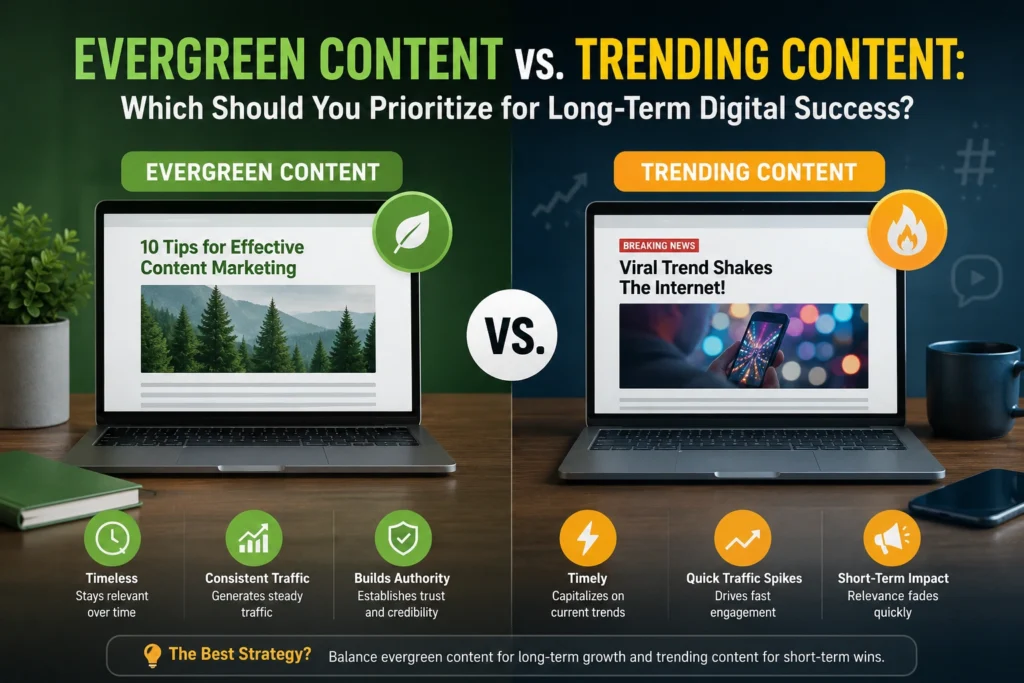
Evergreen Content vs. Trending Content: Which Should You Prioritize for Long-Term Digital Success?

Introduction: Understanding the Content Strategy That Drives Sustainable Growth Evergreen Content vs Trending Content is an important consideration for businesses looking to build a successful digital marketing strategy. Your website is often the first interaction potential customers have with your business. In today’s competitive digital landscape, it serves as your online storefront, sales representative, and customer support channel all at once. Therefore, a well-designed and high-performing website can build trust, generate leads, and increase revenue. However, even small website mistakes can silently drive visitors away and reduce conversions. Unfortunately, many businesses focus only on creating an attractive website while overlooking essential elements such as speed, usability, search engine optimization, and security. As a result, they lose valuable opportunities without realizing the underlying cause. Whether you prioritize Evergreen Content vs Trending Content, maintaining a fast, user-friendly, and SEO-optimized website is essential for maximizing visibility and long-term business growth. 1. What Is Evergreen Content? Website speed plays a critical role in user experience. Visitors expect pages to load within a few seconds, and they rarely wait for slow websites. Consequently, if your pages take too long to load, users will likely leave before exploring your products or services. Furthermore, search engines consider page speed as a ranking factor. A slow website can reduce your visibility in search results, making it more difficult for potential customers to discover your business. To improve loading times, compress images, enable browser caching, minimize unnecessary scripts, and choose reliable web hosting. 2. What Is Trending Content? Today, most internet users browse websites using smartphones and tablets. Therefore, your website must provide a seamless experience across all screen sizes. If visitors need to zoom, scroll excessively, or struggle to navigate, they will quickly abandon your site. Additionally, mobile-friendly websites perform better in search engine rankings. Responsive design automatically adjusts layouts to different devices, ensuring visitors enjoy a consistent experience. Investing in mobile optimization not only improves usability but also increases customer satisfaction and conversion rates. 3. The Key Differences Between Evergreen and Trending Content Visitors should find the information they need without confusion. Unfortunately, complicated menus, excessive categories, and inconsistent navigation create frustration and increase bounce rates. Instead, organize your website using a logical structure. Include clear menu labels, visible call-to-action buttons, and an intuitive layout. As a result, users can navigate your website effortlessly, leading to longer visit durations and more completed actions. 4. Why Evergreen Content Is Essential for Long-Term SEO A visually appealing website alone cannot generate traffic if people cannot find it. Search Engine Optimization (SEO) helps your website appear in search engine results when users search for relevant products or services. However, many businesses neglect SEO fundamentals such as keyword optimization, meta descriptions, heading structures, internal linking, and image optimization. Consequently, their competitors receive more organic traffic. By implementing a strong SEO strategy, you can significantly improve visibility and attract qualified visitors consistently. 5. Why Trending Content Boosts Visibility and Engagement Fresh, informative content demonstrates professionalism and keeps your audience engaged. Conversely, outdated information creates confusion and damages customer trust. Visitors may question whether your business is still active if they notice expired promotions, old blog posts, or inaccurate contact details. Regularly reviewing and updating website content helps maintain accuracy and relevance. Moreover, publishing new blog articles improves SEO performance and positions your business as an industry authority. 6. Challenges of Relying on Only One Content Type Many businesses invest heavily in website design but fail to guide visitors toward taking action. Without clear calls to action (CTAs), users often leave without contacting your business, requesting a quote, or making a purchase. Effective CTAs should stand out visually and use action-oriented language. For example, buttons such as “Get a Free Quote,” “Schedule a Consultation,” or “Contact Our Team Today” encourage users to move forward. Strategic CTA placement throughout your website can significantly improve conversion rates. 7. How to Balance Evergreen and Trending Content Website security has become more important than ever. Customers expect their personal information to remain protected whenever they interact with your website. If visitors notice security warnings, they will likely leave immediately. Installing an SSL certificate, updating plugins regularly, using strong passwords, and implementing secure hosting practices help protect your website against cyber threats. Furthermore, a secure website enhances customer confidence and contributes positively to search engine rankings. 8. Best Practices for Creating High-Performing Content Visual content strongly influences how visitors perceive your business. Blurry images, inconsistent branding, and outdated graphics make your website appear unprofessional. Consequently, users may choose competitors with more polished online presentations. High-quality photography, modern graphics, consistent branding, and optimized images create a professional appearance. At the same time, properly optimized visuals maintain fast loading speeds while enhancing the overall user experience. 9. Measuring the Success of Your Content Strategy Potential customers should never struggle to contact your business. Surprisingly, many websites hide essential information such as phone numbers, email addresses, business hours, or physical locations. Display contact information prominently on every page whenever possible. Additionally, include a contact form, Google Maps integration, and links to your social media profiles. Making communication simple increases customer confidence and encourages inquiries. 10. When Should You Prioritize Evergreen Content Over Trending Content? Launching a website is only the beginning. Continuous monitoring allows businesses to identify technical issues, understand visitor behavior, and improve performance over time. Use analytics tools to measure traffic sources, bounce rates, conversion rates, page performance, and user engagement. Based on these insights, you can make informed decisions that enhance your website and support long-term business growth. Conclusion: Build a Balanced Content Strategy for Lasting Success The debate surrounding Evergreen Content vs. Trending Content: Which Should You Prioritize? does not have a one-size-fits-all answer. Both content types contribute unique benefits that support different stages of the customer journey. Evergreen content builds authority, generates long-term organic traffic, and strengthens your SEO foundation. Meanwhile, trending content increases visibility, encourages social engagement, and positions your brand as a current industry voice. Ultimately, the most effective strategy combines the stability

digital marketing and social media marketing
Uncategorized

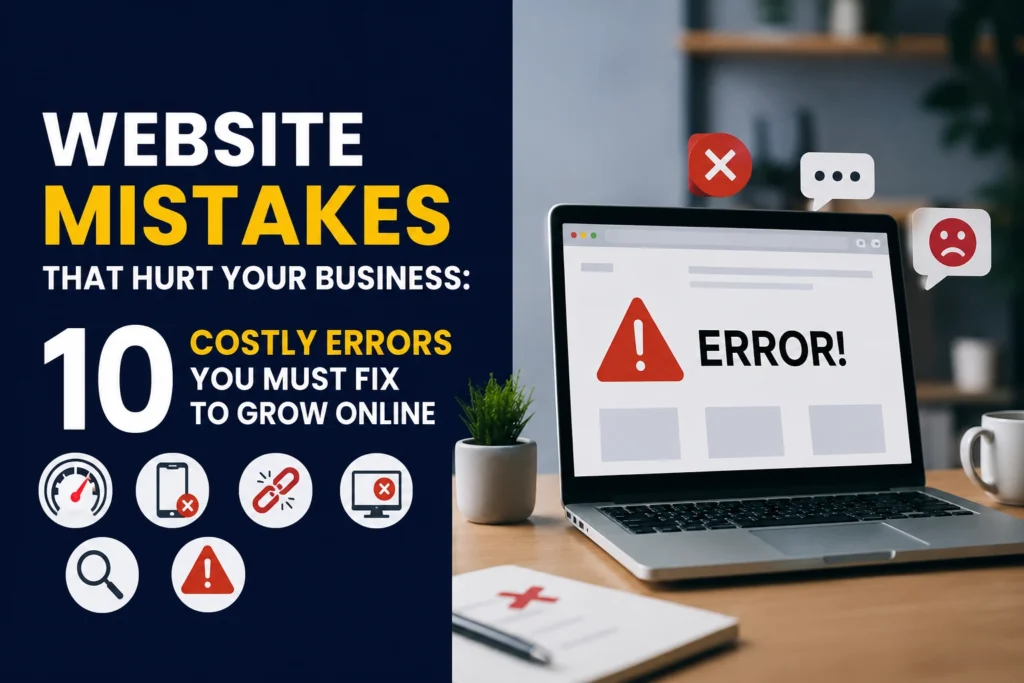
Website Mistakes That Hurt Your Business: 10 Costly Errors You Must Fix to Grow Online

Introduction: Is Your Website Helping or Hurting Your Business? Website Mistakes That Hurt Your Business can significantly impact your online success by reducing traffic, lowering conversions, and damaging customer trust. Your website is often the first interaction potential customers have with your business. In today’s competitive digital landscape, it serves as your online storefront, sales representative, and customer support channel all at once. Therefore, a well-designed and high-performing website can build trust, generate leads, and increase revenue. However, even small website mistakes can silently drive visitors away and reduce conversions. Unfortunately, many businesses focus only on creating an attractive website while overlooking essential elements such as speed, usability, search engine optimization, and security. As a result, they lose valuable opportunities without realizing the underlying cause. In this guide, we will explore the most common Website Mistakes That Hurt Your Business and explain how you can avoid them to improve your online presence, increase conversions, and achieve long-term business growth. 1. Slow Website Speed Drives Visitors Away Website speed plays a critical role in user experience. Visitors expect pages to load within a few seconds, and they rarely wait for slow websites. Consequently, if your pages take too long to load, users will likely leave before exploring your products or services. Furthermore, search engines consider page speed as a ranking factor. A slow website can reduce your visibility in search results, making it more difficult for potential customers to discover your business. To improve loading times, compress images, enable browser caching, minimize unnecessary scripts, and choose reliable web hosting. 2. Poor Mobile Responsiveness Limits Your Reach Today, most internet users browse websites using smartphones and tablets. Therefore, your website must provide a seamless experience across all screen sizes. If visitors need to zoom, scroll excessively, or struggle to navigate, they will quickly abandon your site. Additionally, mobile-friendly websites perform better in search engine rankings. Responsive design automatically adjusts layouts to different devices, ensuring visitors enjoy a consistent experience. Investing in mobile optimization not only improves usability but also increases customer satisfaction and conversion rates. 3. Confusing Navigation Frustrates Users Visitors should find the information they need without confusion. Unfortunately, complicated menus, excessive categories, and inconsistent navigation create frustration and increase bounce rates. Instead, organize your website using a logical structure. Include clear menu labels, visible call-to-action buttons, and an intuitive layout. As a result, users can navigate your website effortlessly, leading to longer visit durations and more completed actions. 4. Weak SEO Prevents Customers from Finding You A visually appealing website alone cannot generate traffic if people cannot find it. Search Engine Optimization (SEO) helps your website appear in search engine results when users search for relevant products or services. However, many businesses neglect SEO fundamentals such as keyword optimization, meta descriptions, heading structures, internal linking, and image optimization. Consequently, their competitors receive more organic traffic. By implementing a strong SEO strategy, you can significantly improve visibility and attract qualified visitors consistently. 5. Outdated Content Reduces Credibility Fresh, informative content demonstrates professionalism and keeps your audience engaged. Conversely, outdated information creates confusion and damages customer trust. Visitors may question whether your business is still active if they notice expired promotions, old blog posts, or inaccurate contact details. Regularly reviewing and updating website content helps maintain accuracy and relevance. Moreover, publishing new blog articles improves SEO performance and positions your business as an industry authority. 6. Poor Call-to-Action Placement Lowers Conversions Many businesses invest heavily in website design but fail to guide visitors toward taking action. Without clear calls to action (CTAs), users often leave without contacting your business, requesting a quote, or making a purchase. Effective CTAs should stand out visually and use action-oriented language. For example, buttons such as “Get a Free Quote,” “Schedule a Consultation,” or “Contact Our Team Today” encourage users to move forward. Strategic CTA placement throughout your website can significantly improve conversion rates. 7. Ignoring Website Security Damages Trust Website security has become more important than ever. Customers expect their personal information to remain protected whenever they interact with your website. If visitors notice security warnings, they will likely leave immediately. Installing an SSL certificate, updating plugins regularly, using strong passwords, and implementing secure hosting practices help protect your website against cyber threats. Furthermore, a secure website enhances customer confidence and contributes positively to search engine rankings. 8. Low-Quality Visuals Create a Poor First Impression Visual content strongly influences how visitors perceive your business. Blurry images, inconsistent branding, and outdated graphics make your website appear unprofessional. Consequently, users may choose competitors with more polished online presentations. High-quality photography, modern graphics, consistent branding, and optimized images create a professional appearance. At the same time, properly optimized visuals maintain fast loading speeds while enhancing the overall user experience. 9. Missing Contact Information Creates Frustration Potential customers should never struggle to contact your business. Surprisingly, many websites hide essential information such as phone numbers, email addresses, business hours, or physical locations. Display contact information prominently on every page whenever possible. Additionally, include a contact form, Google Maps integration, and links to your social media profiles. Making communication simple increases customer confidence and encourages inquiries. 10. Failing to Monitor Website Performance Launching a website is only the beginning. Continuous monitoring allows businesses to identify technical issues, understand visitor behavior, and improve performance over time. Use analytics tools to measure traffic sources, bounce rates, conversion rates, page performance, and user engagement. Based on these insights, you can make informed decisions that enhance your website and support long-term business growth. Best Practices to Avoid Website Mistakes Avoiding common website mistakes requires ongoing attention rather than one-time improvements. Start by conducting regular website audits to identify broken links, outdated content, slow-loading pages, and usability issues. In addition, test your website across multiple browsers and devices to ensure consistent performance. Furthermore, prioritize customer experience in every design decision. Create valuable content, maintain clear navigation, optimize for search engines, and strengthen website security. These improvements work together to increase visitor satisfaction, strengthen brand credibility,

Scroll to Top