
Introduction: Understanding the Content Strategy That Drives Sustainable Growth
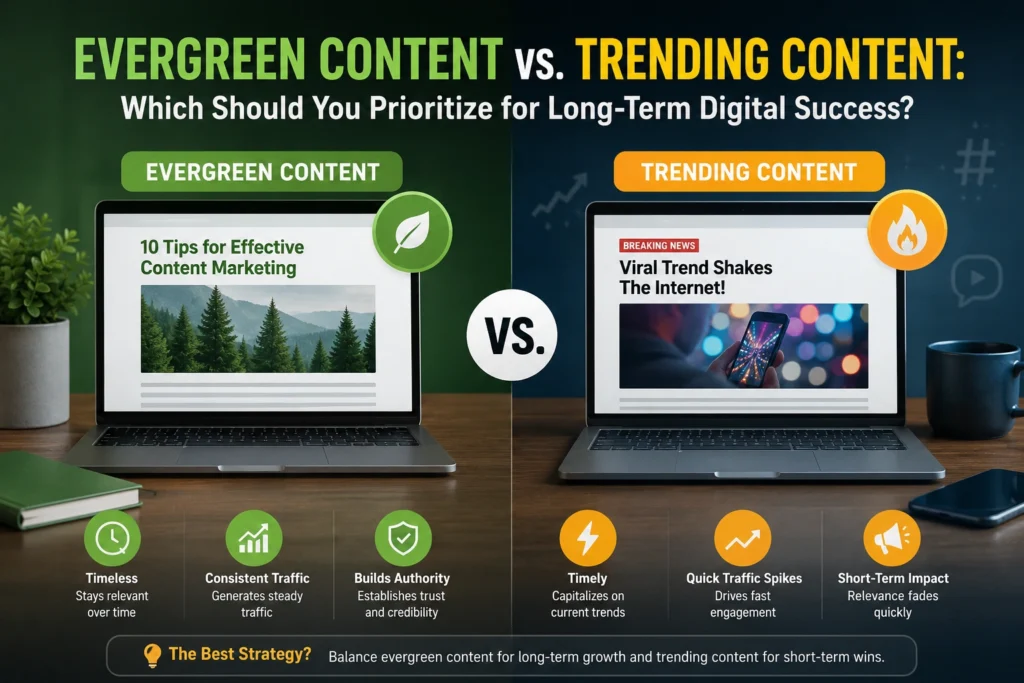
Evergreen Content vs Trending Content is an important consideration for businesses looking to build a successful digital marketing strategy. Your website is often the first interaction potential customers have with your business. In today’s competitive digital landscape, it serves as your online storefront, sales representative, and customer support channel all at once. Therefore, a well-designed and high-performing website can build trust, generate leads, and increase revenue. However, even small website mistakes can silently drive visitors away and reduce conversions.
Unfortunately, many businesses focus only on creating an attractive website while overlooking essential elements such as speed, usability, search engine optimization, and security. As a result, they lose valuable opportunities without realizing the underlying cause. Whether you prioritize Evergreen Content vs Trending Content, maintaining a fast, user-friendly, and SEO-optimized website is essential for maximizing visibility and long-term business growth.
1. What Is Evergreen Content?
Website speed plays a critical role in user experience. Visitors expect pages to load within a few seconds, and they rarely wait for slow websites. Consequently, if your pages take too long to load, users will likely leave before exploring your products or services.
Furthermore, search engines consider page speed as a ranking factor. A slow website can reduce your visibility in search results, making it more difficult for potential customers to discover your business. To improve loading times, compress images, enable browser caching, minimize unnecessary scripts, and choose reliable web hosting.
2. What Is Trending Content?
Today, most internet users browse websites using smartphones and tablets. Therefore, your website must provide a seamless experience across all screen sizes. If visitors need to zoom, scroll excessively, or struggle to navigate, they will quickly abandon your site.
Additionally, mobile-friendly websites perform better in search engine rankings. Responsive design automatically adjusts layouts to different devices, ensuring visitors enjoy a consistent experience. Investing in mobile optimization not only improves usability but also increases customer satisfaction and conversion rates.
3. The Main Distinctions Between Trending and Evergreen Content
Visitors should find the information they need without confusion. Unfortunately, complicated menus, excessive categories, and inconsistent navigation create frustration and increase bounce rates.
Instead, organize your website using a logical structure. Include clear menu labels, visible call-to-action buttons, and an intuitive layout. As a result, users can navigate your website effortlessly, leading to longer visit durations and more completed actions.
4. Why Evergreen Content Is Essential for Long-Term SEO
A visually appealing website alone cannot generate traffic if people cannot find it. Search Engine Optimization (SEO) helps your website appear in search engine results when users search for relevant products or services.
However, many businesses neglect SEO fundamentals such as keyword optimization, meta descriptions, heading structures, internal linking, and image optimization. Consequently, their competitors receive more organic traffic. By implementing a strong SEO strategy, you can significantly improve visibility and attract qualified visitors consistently.
5. Why Trending Content Boosts Visibility and Engagement
Fresh, informative content demonstrates professionalism and keeps your audience engaged. Conversely, outdated information creates confusion and damages customer trust. Visitors may question whether your business is still active if they notice expired promotions, old blog posts, or inaccurate contact details.
Regularly reviewing and updating website content helps maintain accuracy and relevance. Moreover, publishing new blog articles improves SEO performance and positions your business as an industry authority.
6. Challenges of Relying on Only One Content Type
Many businesses invest heavily in website design but fail to guide visitors toward taking action. Without clear calls to action (CTAs), users often leave without contacting your business, requesting a quote, or making a purchase.
Effective CTAs should stand out visually and use action-oriented language. For example, buttons such as “Get a Free Quote,” “Schedule a Consultation,” or “Contact Our Team Today” encourage users to move forward. Strategic CTA placement throughout your website can significantly improve conversion rates.
7. How to Balance Evergreen and Trending Content
Now more than ever, website security is crucial. Customers expect their personal information to remain protected whenever they interact with your website. If visitors notice security warnings, they will likely leave immediately.
Installing an SSL certificate, updating plugins regularly, using strong passwords, and implementing secure hosting practices help protect your website against cyber threats. Furthermore, a secure website enhances customer confidence and contributes positively to search engine rankings.
8. Best Practices for Creating High-Performing Content
Visitors’ perceptions of your company are greatly influenced by visual material. Blurry images, inconsistent branding, and outdated graphics make your website appear unprofessional. Consequently, users may choose competitors with more polished online presentations.
High-quality photography, modern graphics, consistent branding, and optimized images create a professional appearance. At the same time, properly optimized visuals maintain fast loading speeds while enhancing the overall user experience.
9. Measuring the Success of Your Content Strategy
Potential customers should never struggle to contact your business. Surprisingly, many websites hide essential information such as phone numbers, email addresses, business hours, or physical locations.
Display contact information prominently on every page whenever possible. Incorporate Google Maps integration, a contact form, and links to your social media accounts. Making communication simple increases customer confidence and encourages inquiries.
10. When Should You Prioritize Evergreen Content Over Trending Content?
Launching a website is only the beginning. Continuous monitoring allows businesses to identify technical issues, understand visitor behavior, and improve performance over time.
Use analytics tools to measure traffic sources, bounce rates, conversion rates, page performance, and user engagement. Based on these insights, you can make informed decisions that enhance your website and support long-term business growth.
Conclusion: Build a Balanced Content Strategy for Lasting Success
The debate surrounding Evergreen Content vs. Trending Content: Which Should You Prioritize? does not have a one-size-fits-all answer. Both content types contribute unique benefits that support different stages of the customer journey. Evergreen content builds authority, generates long-term organic traffic, and strengthens your SEO foundation. Meanwhile, trending content increases visibility, encourages social engagement, and positions your brand as a current industry voice.
Ultimately, the most effective strategy combines the stability of evergreen content with the excitement of trending topics. By maintaining this balance, businesses can achieve sustained website growth, improve audience engagement, strengthen search engine rankings, and maximize the long-term value of every piece of content they publish. Instead of choosing one over the other, prioritize a content plan that integrates both approaches to create a resilient and successful digital marketing strategy.